

Full-time vs Part-time Work: Definitions, Industry Practices, Pros and Cons, and More

Understanding how and when to hire full-time or part-time employees for your business can help you better manage labor costs and build a thriving work environment. The industry you operate in and the resources you have available all play a critical role in these decisions, but you should also show flexibility and understand that both sides can bring many benefits.
By the end of this article, you’ll have a deeper understanding of the core differences between hiring full-time and part-time employees, how to structure employment types, and the pros and cons to consider as an employer.
Ultimately, you’ll be better equipped to control your business’s labor costs and productivity.
Let’s dive in!
Table of Contents
- Definitions and Time Commitment
- Sector-Specific Practices
- Legal and Financial Implications
- Pros and Cons for Employers
- Guidelines for HR Teams
- Streamline All Best Practices with Software
Definitions and Time Commitment
The main differentiator between full-time and part-time employees is their time commitment to the employer. In the United States and Canada, there are subtle differences in the definitions for full-time and part time employees, so we’ll outline both. However, they are quite similar.
The definition of a full-time employee
For the United States, full-time employment is considered to be around 30 to 40 hours per week. However, theFair Labor Standards Act (FLSA) doesn’t define full-time employment, leaving it to employers’ discretion.
In Canada, staff are considered full-time if they work 30 hours or more per week. While typical full-time employers required employees to work 35 to 40 hours per week, in line with labor regulations. Most often, everything above 40 hours is simply considered to be overtime.
The definition of a part-time employee
In both the United States and Canada, the definitions for part-time work are practically indistinguishable. Part time employment is under 30 hours per week. While full-time employees are quite consistent with 40-hour work weeks, part-time hours have much larger variations. Some may work a few hours a week or up to 30 hours, depending on their personal situation.
Other Differences between Part-Time and Full-time Employees
The hours worked is the main way that employees are differentiated between part-time and full-time work. That differentiation plays into many other factors like benefit packages, employer costs, career progression expectations, and more.
Benefits & Vacation Time
While benefits are not mandatory in the United States, in order to compete among other employers, having a strong benefits package with health insurance, 401k matching, etc., will help you attract the right talent.
In Canada, some benefits are mandatory for full-time employees, like vacation time and sick leave, etc., so it’s important that you follow these regulations to avoid workplace fines.
Job Security
Full-time employees typically have better job security than part-time employees. As part-time help can be seasonal or project based, so there are shorter timelines and outcomes.
This is also true as they can gain seniority (hours worked) faster and climb the assignment priority ladder quicker. They will most likely also create a stronger bond with their manager, meaning that they will often be the first called out for better positions, even though that is a lot less common than it used to.
Work-Life Balance
Working part-time gives employees more flexibility in their day-to-day, so their work-life balance is typically better. A full-time job typically takes up 40 hours of someone’s week, including a commute to and from work. Leaving less room for that day-to-day flexibility.
However, we see many employees cumulate a few part-time gigs. This can therefore either bring more flexibility or an additional challenge of aligning each gig’s schedule if they can’t benefit from a good and unified scheduling software. 😉
Costs for Employers
The costs for employers is higher for full-time employees as you’re not just paying for their time anymore. Employers need to consider payroll costs, statutory holiday pay, benefits, additional taxes, pension contributions, etc.
For example, in Canada, employers pay 50% of the CPP contributions for both full-time and part-time employees. Be sure to check your local regulations to make sure your estimated costs are in line with what’s required.
| Criteria | Full-Time Employment | Part-Time Employment |
| Definition (USA) | Typically 30-40 hours/week (varies by employer) | Less than 30 hours/week (varies by employer) |
| Definition (Canada) | Generally 30+ hours/week | Generally less than 30 hours/week |
| Benefits | More extensive (health insurance, paid time off, retirement plans) | Limited or no benefits |
| Job Security | Higher job security; clearer career progression | Lower job security; limited career progression |
| Work-Life Balance | Less flexible, standard workweek | More flexible, suitable for balancing other commitments |
| Cost to Employers | Higher (due to benefits and other compensations) | Lower (flexible scheduling, fewer benefits) |
Beware though to see part-time hires as financial unicorns. They may not come with as many direct costs, but they will incur some additional indirect expenses as you will need to train a few more people to cover the same number of productive hours and may see a little higher turnover rate, hence increasing your recruiting costs. However, if you have the right tools and processes in place, you can easily reduce these impacts on your business.
Also try to factor in productivity, as part-time workers may come for a fully productive 20 hours while it is normal for full-time workers to have some downtime throughout their days as their energy levels fluctuates.

Sector-Specific Practices
When it comes to how you’ll use full-time and part-time employees in your business will fully depend on your specific business needs. Any role can be part-time or full-time based on how you want to structure your teams.
However, there are some common practices across different industries for full-time and part-time staff.
Jump to your industry:
Healthcare
Full Time Staff Functions
Focus on the core functions of the senior home, care centre, hospital, or healthcare practices. This usually includes nurses, doctors, and other essential full-time roles to ensure that patient care is consistently high.
Part Time Staff Functions
Flexible positions that include administrative roles or non-critical care elements can fluctuate with patient loads. There could be seasonal demand during flu season or other high-demand periods. Part-time staffing is a great solution for these roles and demand changes.
Hospitality
Full Time Staff Functions
The core function of a restaurant or hotel should have full-time staff to build internal expertise and ensure the businesses reputation. This could include a head chef, hotel managers, general managers, etc. Any role that is dependent on customer relationship management should be a full-time role—a pillar in the service industry.
Part Time Staff Functions
Similar to healthcare, part-time staff are perfect for those shorter time windows when things get busy, like a restaurant at dinner or a hotel during a local conference. They can assist as servers, guest agents, cleaning staff, and more. Then again, if those people are key to your business operations, you may decide to go with additional full-time roles.
Retail
Full Time Staff Functions
The time commitments for retailers resembles hospitality. Full-time staff most often includes managerial or specialised roles like store managers or head merchandisers.
Part Time Staff Functions
Part-time staff cover peak shopping hours, weekends, and holidays, ensuring cost-effective store or shipment coverage. You can also increase hiring during the holiday season or special events, with the expectation it’s only part-time or seasonal.
Manufacturing
Full Time Staff Functions
Full-time workers are essential for continuous production lines and maintaining quality control. They are often more skilled and look for full-time employment as they are critical for complex manufacturing processes.
Part Time Staff Functions
Use part-time workers during peak production periods or to cover for full-time staff absences. Like other industries, non-critical roles that aren’t’ critical to production or that fluctuate with seasonality can include part-time staff. Helping you better manage labor costs.
Summary Table
| Sector | Best Practices for Full-Time Staff | Best Practices for Part-Time Staff |
| Healthcare | Core functions like patient or critical care. | Flexibility for non-core functions. Seasonal demand management. |
| Retail | Key roles in management and specialized positions. | Scheduling flexibility for peak hours. Seasonal staffing increases. |
| Manufacturing | Core production roles and maintaining quality control. Staff with specialized skills. | Supplementing workforce during peak production. Assigning to non-core activities. |
| Hospitality | Critical roles like chefs, hotel managers. Building customer relationships. | Staffing for peak times and special events. Bringing diverse skills for temporary needs. |
Legal and Financial Implications
Leave Entitlements
Be aware of legal requirements for vacation and sick leave, which may apply differently to full-time and part-time employees. There are also other leave entitlements for maternity and paternity leave, and this can vary based on the employee’s working hours, tenure, and regulatory requirements.
Discrimination Laws
Avoid discrimination at all costs. Ensure that hiring, promotion, and termination practices are non-discriminatory and that part-time employees are not treated less favorably than full-time employees.
For many industries like retail and hospitality, part-time employees are the backbone of the business, so it’s increasingly important to avoid any discrimination, for the health of your business.
In Canada, businesses can follow the Canadian Human Rights Act. In the United States, the US Equal Employment Opportunity Commission outlines these details.
Regulatory Compliance
Lastly, it’s especially important that you stay informed about changes in labor laws at both local and federal levels, as they can frequently change and impact how you manage your workforce.
Better Manage Both Full-Time and Part-Time with Evolia
Evolia’s HR and Workforce Management Platform allows you to recruit, schedule, and manage your employees, saving you countless hours in admin work.
Pros and Cons for Employers
Now that we’ve set the technicalities you are dealing with, there are many advantages and disadvantages for employers when it comes to the different hourly commitments of their staff. Let’s break down what those look like so you have a better understanding.
Pros for employers
| Aspect | Full-Time Employees | Part-Time Employees |
| Consistency & Continuity | Higher stability in operations and work quality. | Flexible scaling of workforce as per needs. |
| Investment in Training | More in-depth training due to longer tenure. Often manageable on a case-by-case basis. | Requires a replicable training program to leverage additional workers. |
| Employee Engagement | Higher loyalty and lower turnover. | Ideal for specific, short-term projects. |
| Skill Development | Deeper role and business understanding. | Access to a talent pool for full-time roles. |
| Energy level | Higher commitment, development of leaders among the workforce | Constant energy flow, less downtime and often a higher average impact. |
| Availability | More availability for various needs. | Additional flexibility to scale productivity as needed. |
Cons for employers
| Aspect | Cons of Full-Time Employees | Cons of Part-Time Employees |
| Costs | Includes salaries, benefits, and other costs. | Higher recruitment costs. May generate downtimes due to higher turnover rates. |
| Flexibility | Less scheduling flexibility. | Training and integration challenges. |
| Seasonality | Inefficiency during slower periods. | Limited availability for meetings and extended hours. |
| Hiring | Longer hiring cycles | Higher turnover rates. |
Guidelines for HR Teams
Follow these guidelines and action items for each area so you can better manage and utilise both full-time and part-time employees to the best of their ability.
Clear Communication
Establish open lines of communication for all employees to voice their concerns and opinions on their work schedules, day-to-day work, and their positions. This will not only help increase engagement, but it can also help you explore areas for improving the workplace for both full-time and part-time workers.
As all employees do not have the same schedules, it may be harder for them to communicate and collaborate. Consider implementing digital communication tools like Evolia’s workplace communication platform as they usually help alleviate the challenge as employees can answer each other’s concerns and questions when they get on the job.
Implement regular department meetings designed for feedback. These can be broken up between part-time and full-time workers, or by department.
Also make sure to hold events where all employees can meet and get to know each other. This is key to creating collaboration and an efficient work culture in contexts where you have a lot of part-time workers.
Fair Scheduling Practices
No one likes when only certain staff receive the best shifts. Making sure the schedules are balanced so employee availability is maximised will help reduce turnover and make post-schedule feedback a delight.
Even though creating a full-time standard schedule often seems faster, try to leverage your entire workforce and make sure to keep part-time workers on schedule so they remain engaged. This will help you make sure that they stay ready to work and join in at the times you need them most.
We know it’s hard to align schedules for everyone, making sure you honour your commitment with your full-time crew, while keeping part-timers on board. A smart scheduling solution can sure help here (!) but it is mostly a collaborative process between employees and managers that will make sure you stay on top. As simple as it may be, we’ve seen highly unionised organisations achieve 10-15% more shift assignment simply by collaborating directly with their employees to create ideal schedules.
Recommended Reading:5 Night Shift Schedule Examples for a Healthier Workplace
Training and Development
Offer development opportunities to all staff. This will help you better manage both part-time and full-time workers, as some part-time staff may want to move full-time in the future. Allowing them the flexibility to grow within the company.
Or, some staff may want to explore other positions. Cross-training them will help you cover if you’re short-staffed or need to hire, while they get to grow into a new role. A win-win.
Streamline All Best Practices with Technology
Managing different work schedules, checking hours, setting up shift swaps, hiring seasonal staff, and ensuring smooth workplace communication can be stressful without help. Especially as full-time and part-time workers require separate schedules and time allocated to creating fair schedules.
With the help of Evolia, these things can be automated based on your business needs, to help you save time and focus on the things that really matter for the organization. All while ensuring high quality workforce management to keep employees engaged.
Automate Schedule Management
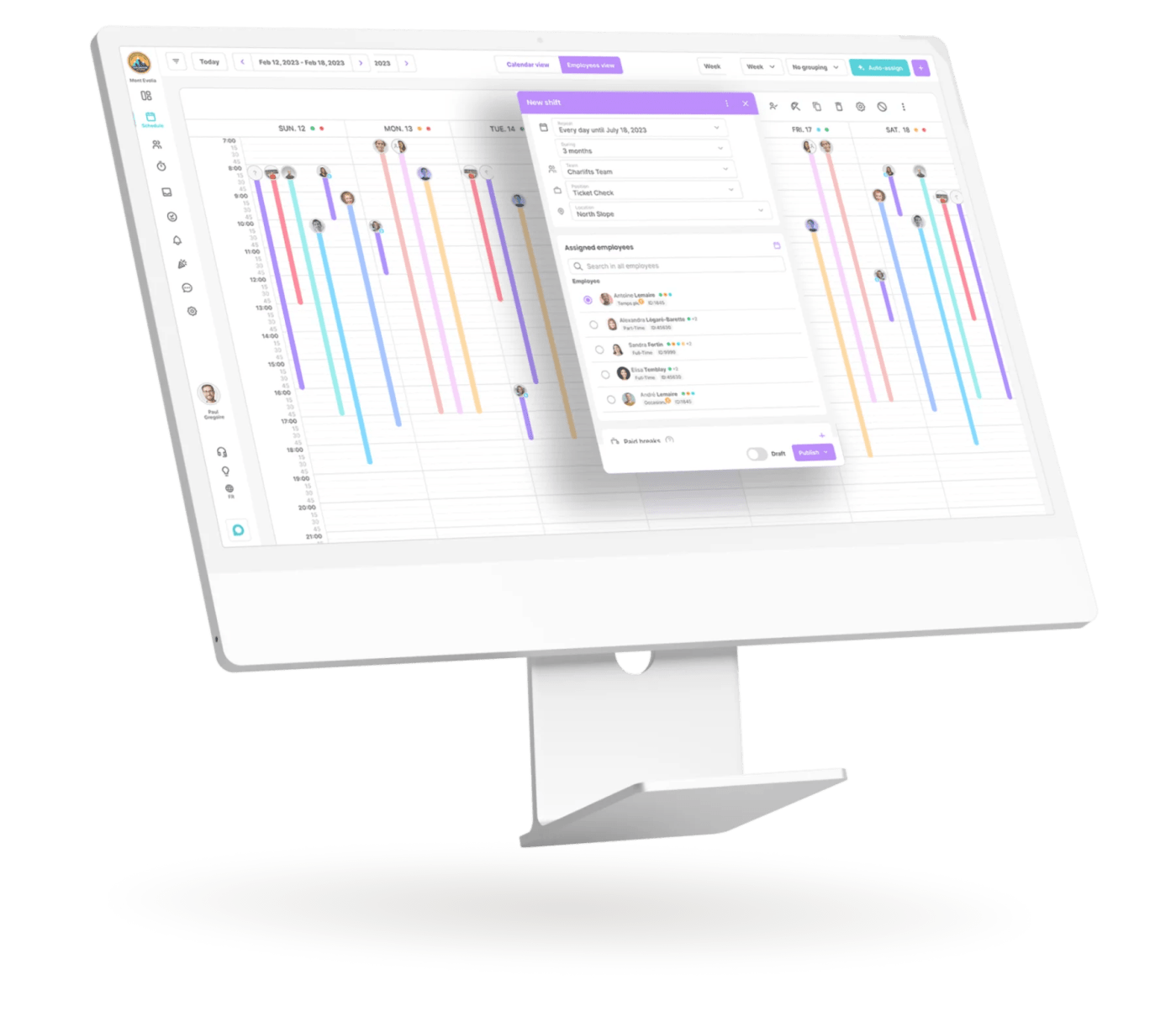
Our smart scheduling feature can take care of all your scheduling needs. By taking into account your employees’ availability, their department/skillset, and changing needs of the business, create optimal schedules that are in-line with labor regulations. Ensuring that the right staff are assigned to the right shifts.
Set different rules for full-time or part-time staff and allow them to swap shifts all through Evolia. Avoid common scheduling headaches that come with paper or other apps not meant to schedule staff.
Put Leave Management on Autopilot
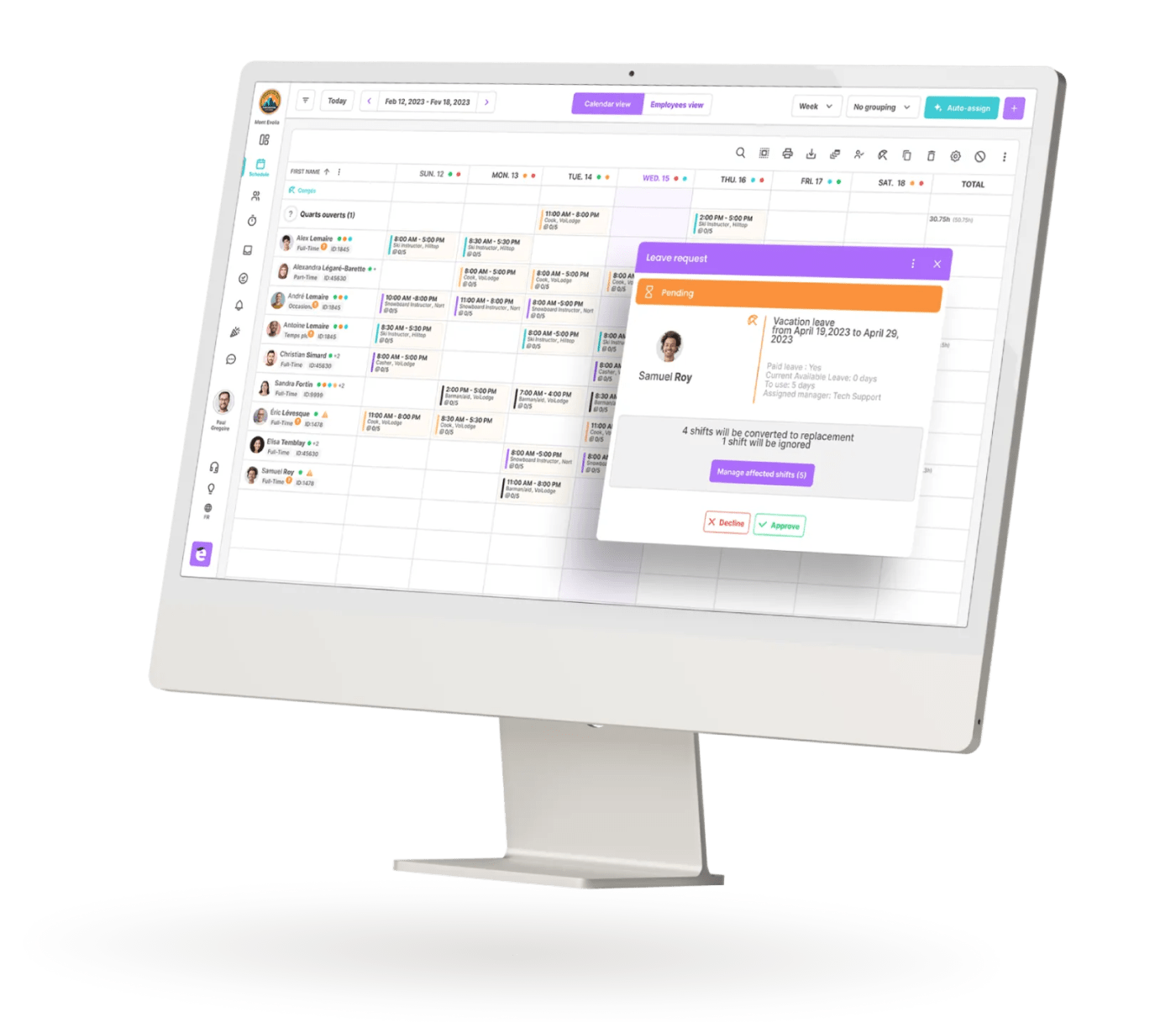
Allow employees to input their availability, preferences, and time-off requests. Let Evolia’s leave management tools handle the heavy lifting of incorporating that information into schedules. Not only does this empower employees and give them a sense of ownership in their schedule, it also ensures that there are fewer scheduling conflicts.
For example, if you have seasonal staff that you’ll re-hire next season, you can implement that in the software to handle their absence.
Communicate with all employee levels with an easy to use app
Any changes to the schedule are immediately communicated to relevant employees through notifications. This ensures everyone is kept up-to-date, reducing misunderstandings and no-shows, and enhancing overall operational efficiency.
Or use team chat tools to coordinate different communication for full-time or part-time employees.

Leverage an integrated tech-stack
Integration capabilities with payroll, time and attendance tracking, and other HR management systems mean that data flows seamlessly between systems. This reduces the need for manual data entry, minimises errors, and provides a holistic view of workforce management.
Better Manage Both Full-Time and Part-Time with Evolia
Evolia’s HR and Workforce Management Platform allows you to recruit, schedule, and manage your employees, saving you countless hours in admin work.
Final Thoughts
Hopefully these tips will help understand if you are better off hiring part-time or full-time workers. We believe a mix of both is usually the ideal recipe to ensure consistency and flexibility at the same time. There are many benefits to utilising a combination of time commitments for your employees, and this varies by industry.
By carefully assessing whether full-time and part-time staffing aligns with your specific business needs, you can effectively implement best practices and software solutions to simplify this process.
Ready to make this all easier with Evolia? Get started for free using the Essential Plan from Evolia.
Featured Articles


See Evolia in action. Request a Demo!
Let our experts show you how we can streamline your scheduling and optimize your HR operations.
Get a personalized demo to:
- Automate scheduling and time & attendance.
- Find the workers you need and optimize your internal resources
- Integrated with most HRIS and ERP softwares
We make it work for you!