


Swing shifts, the piece of the scheduling puzzle you’re looking for to help solve for overworked staff and underserved customers.
And no, we’re not talking about the Swing Shift movie. In this article, we’ll be diving into what a swing shift is, and how to properly use them in your business to solve scheduling headaches. Along with some suggested best practices for better managing swing shifts, without adding more tasks to you or the scheduling managers plate.
Learn how you and your team can unlock a new level of flexibility and efficiency, with swing shifts!
Table of Contents
- What is a Swing Shift?
- How do Swing Shifts Work?
- Common Swing Shift Priorities
- Best Practices When Using Swing Shifts
- How to Successfully Implement Swing Shifts
- Examples by Industry
- Help Ensure Work-Life Balance for Employees
- Automate All This Work with Evolia
What is a Swing Shift?
A swing shift is a type of shift that fits between the day and night shifts, typically between the hours of 3:00 pm to 12:00 am.
It’s a common shift that helps businesses extend service for noon or afternoon operations, and into the evening. Helping to accommodate customer demands and peak activity, without significant overtime costs and long shifts for the morning staff.
The swing shift also offers a unique opportunity for staff to have more flexibility with their day. They can attend to any personal obligations and appointments during the day, when most businesses like banks and doctors are open.
Swing shifts are also less-disruptive on a person’s health compared to night shifts. And these shift types allow the business to have additional help to manage changes in demand and put employee well-being at the forefront.
How do Swing Shifts Work?
Swing shifts find that middle ground between the 1st shift (morning/day) and 3rd shifts (night), with a hybrid approach to the start and end times.
For the swing shift, this could look like having an employee start their shift at 2:00pm and finishing the shift around 10:00pm. If there are morning staff that started at 8:00am, their shifts may end at 3:00pm or 4:00pm. This overlap ensures a smooth transition between shifts, allowing for effective handovers and continuous operation.
If you’re running 24/7 schedules for the business, these shift types are ideal for smooth and continuous operation. This may look like having multiple swing shifts that have staggered start times. One person may begin at 12:00pm and another may begin at 4:00pm or 5:00pm. This presents additional staffing coverage for both the morning staff and night staff for the periods of higher demand.
Swing shifts can also be effective for regular or cross-training employees. With the trainee starting at a later time, they can be trained on duties for an upcoming shift, so they are prepared.
For example, let’s say you need to train a new employee on the morning opening duties for a water-park business, but cannot double-up on the morning shift employees. A swing shift would allow room for the trainee to start later, learn about the important duties, and still cover important customer service needs throughout the afternoon.
Recommended Reading: How to Schedule Employees Effectively

Common Swing Shift Priorities
While there are a myriad of problems that swing shifts help solve, these are the most common reasons that scheduling managers implement swing shifts.
Better Customer Service
Swing shifts can almost be considered the backbone of the hospitality industry. One of the main goals with a swing shift in a hotel or restaurant is to provide outstanding customer service during peak hours or seasonal activities.
Increase Operational Efficiency
For schedules in manufacturing, healthcare, and logistics companies, swing shifts are critical for continued operations and hitting production targets, without large increases in labor costs due to overtime. These shifts help bridge the gap between day and night operations, ensuring that machinery and resources are utilized efficiently.
Fair Workload Management
Swing shifts can also help manage the workloads more evenly among staff. This in-turn helps to prevent burnout, boosts employee morale, and reduces staff turnover. While ensuring that tasks are completed timely during peak periods of activity.
For example, the night staff may have a hard time completing certain tasks that are imperative to a successful shift for the morning workers. A swing shift worker could be scheduled to help assist the night crew in their tasks to create time for morning preparation tasks.
Flexibility and Work-Life Balance
Offering swing shifts can provide employees with more flexibility in their schedules, accommodating those who have daytime commitments such as schooling, families, or other personal responsibilities.
Recommended Reading: 13 Benefits of an HR Workforce Management Software For Your Business
Best Practices When Using Swing Shifts
Implementing swing shifts into your current scheduling process isn’t that difficult if you use scheduling software like Evolia. However, there are still some best practices you want to follow to make these shift types as effective as possible.
Effective Schedule Communication
If you’re going to implement swing shifts in the schedule, it’s best to begin reviewing and updating employee availability, to see who best fits in these shift types. Get feedback from staff directly on who wants to work those shift hours so both managers and employees are on the same page.
When the first swing shift is in the schedule, let the other morning and evening shift workers be aware of the extra help on the way.
Consider Rotating Schedules
In order to keep schedules fair and reduce the monotony that can come with fixed schedules, consider implementing a rotating schedule for all shifts or just the swing shifts. Not only are rotating schedules easier to manage shift fairness, it can also be a great way for different employees to collaborate and learn about other parts of the business.
If you are assigning shifts on a self-scheduling basis, that’s even better! Swing shifts will simply offer more options to your staff by introducing additional flexibility. Even if some like their work routine, they may appreciate an occasional change to book personal meetings for instance.
Let’s pretend you’re managing a Zoo. The person who always works the morning shift may have tons of experience dealing with the daily delivery, but have no clue in how to assist customers during the afternoon or evening animal exhibits. This cross-training experience can be invaluable for your workforce and future efficiency.
Recommended Reading: How Evolia Saves the Granby Zoo Half a Day Per Week on Payroll
Allow Shift Swaps
A great way to reduce the time needed in managing employee schedules is to allow shift swaps. Scheduling software like Evolia can help you do this easily, so staff can offer up shifts and others can bid on them. If something comes up, a replacement can be easily found. Swing shifts therefore present additional swap shift opportunities when needed.

Shift Swap Feature in Evolia
Training and Support
Ensure that swing shift employees receive the same level of training and support as those on traditional shifts. These can be aspects like access to management, opportunities for career development, and the tools they need to perform their jobs effectively.
Manage Swing Shifts with Software
The best way to implement a new shift type and manage a flexible workforce is to use workforce management software.
A software like Evolia can help you or your scheduling teams to better plan schedules, forecast labor costs, streamline communication, and integrate time tracking with your payroll.
Easily save 5 to 10 hours a week, while presenting a better experience for all your employees or colleagues.
How to Successfully Implement Swing Shifts in Your Business
So, swing shifts sound pretty great, hey? Here is how to successfully implement them into your business and scheduling practices.
Step 1: Analyze Business Needs and Workforce Availability
The best first step is to find out the peak hours for your customers, facilities demands, and staff workload peaks. Also take a deep-dive to see if there are regular instances of overtime for certain shifts or employees. Both these angles will help you identify areas where a swing shift can help the business perform more efficiently.
We also recommend getting feedback directly from employees. Understand when they feel like they could use additional support or resources. These could also be times where quality or customer service may suffer because of unanticipated workloads.
This bottom up approach can also help boost morale as staff feel involved in the process and solution.
Step 2: Design the Swing Shift Schedule
Based on the research from step 1, determine what the design of the swing shift will be. It doesn’t have to fall into a classic 8-hour shift from 4:00pm to 12:00am. It can be flexible to fit your operational or customer demand peaks.
Plan what employees will fit into this shift and if you need to recruit and manage more shift workers to fill the shifts.
Schedule brief overlaps between shifts (e.g., 30 minutes or more) to allow for effective handovers and debriefings of the other staff members.
Step 3: Communicate the Plan
Set a launch date and communicate with employees both before and after the launch of this new shift type. That way, there are no surprises for either scheduled staff or schedule managers.
Be open to feedback. Encourage employees to share their thoughts and concerns about the new schedule. Whether that’s an in-person conversation or a quick instant message through Evolia.
Step 4: Implement the Schedule
This step is straightforward, schedule staff to that new shift time wherever you manage your workforce schedules.
If you’re using excel, Google Calendar, or snapchat to schedule staff, this could be a pain as you’ll need to update your scheduling templates and settings manually.
We highly recommend using automated scheduling software to implement this. No need to update spreadsheets and have another shift time that needs to be managed. You can easily create a swing shift in a few clicks and have someone scheduled in minutes, based on availability and skillset. Then if someone wants to swap shifts, staff can do that through the app.
Recruit, Schedule & Manage your Workforce FREE
Evolia’s HR and Workforce Management Platform allows you to recruit, schedule, and manage your employees, saving you countless hours in admin work.
Swing Shift Examples by Industry
Swing shifts play a crucial role in various industries by ensuring continuous operation, optimizing workforce management, and meeting the fluctuating demands of customers.
Here’s how swing shifts are applied across different sectors, providing examples of their implementation and benefits:
Senior Care Homes
24/7 Assisted Living and Senior Care facilities use swing shifts to cover the increased patient needs during late afternoons and evenings for specific care. A typical swing shift might run from 3:00 pm to 11:00 pm, ensuring that there is sufficient staffing to handle emergencies, patient care, guest visits, and administrative duties during these peak times.
Manufacturing
Manufacturing plants often operate on a 24-hour basis or have tight production timelines during the day to meet targets and delivery deadlines. Swing shifts, such as 4:00 pm to 12:00 am, enable these businesses to fuel operations beyond a standard shift schedule, increasing output.
Theatre
Especially those hosting live performances, movies, or special events, benefit significantly from implementing swing shifts to assist guests during peak attendance hours. A typical swing shift might run from 2:00 pm to 10:00 pm, coinciding with matinee performances, evening shows, and the necessary preparations and wrap-up associated with each event. During these hours, swing shift employees handle a variety of critical tasks, including ticket sales, guest services, concessions, seating assistance, and technical operations such as sound and lighting for performances.
Recommended Reading: Full-time vs Part-time Work: Definitions, Industry Practices, Pros and Cons, and More
Help Ensure Work-Life Balance for Employees
Supporting employees who do shift work is important for maintaining a healthy, productive, and engaged workforce. Due to the nature of swing shifts, it can be easy to dismiss the work-life balance impact when compared to other shifts.
For example, if an employee is scheduled for a swing shift until 11:00 pm, be mindful of scheduling that some individual for the 8:00 am shift start the next morning. Add in rules into your scheduling software or be mindful of situations like this to help avoid employee burnout. Lack of support is a leader for employee burnout in an organization.
It’s common for employees to prefer the 2nd shift / swing shift anyways…
Have you worked an evening/swing shift?
byu/mirandahobbesnyc incareerguidance
Automate All This Work of Swing Shifts with Evolia
Using manual processes, implementing swing shifts could add to the already long list of tasks that you have on your plate.
So, to make this more manageable, along with automating your other processes, implementing a workforce management solution is well worth the investment. Here’s how software like Evolia can help you and your team save time and leverage tools to operate more efficiently. You can focus on the more important aspects of the organization.
Schedule Creation and Management
Using Evolia’s automated scheduling feature, easily create and assign swing shifts based on a number of different criteria that you can set! Employees can also better manage their schedules by swapping shifts directly from the app on their phones. With real-time schedule updates, there are no manual steps required to provide an updated shift schedule. Self-serve employee scheduling tools is one of the major trends in HR.
Automated Scheduling
Wouldn’t it be nice if you could simply automate your staff scheduling, without errors? That’s where auto scheduling software, like Evolia, comes in. This reduces the time spent on manually plotting each employee’s schedule, decreases the likelihood of errors, and ensures a fair distribution of shifts.
Communication Tools
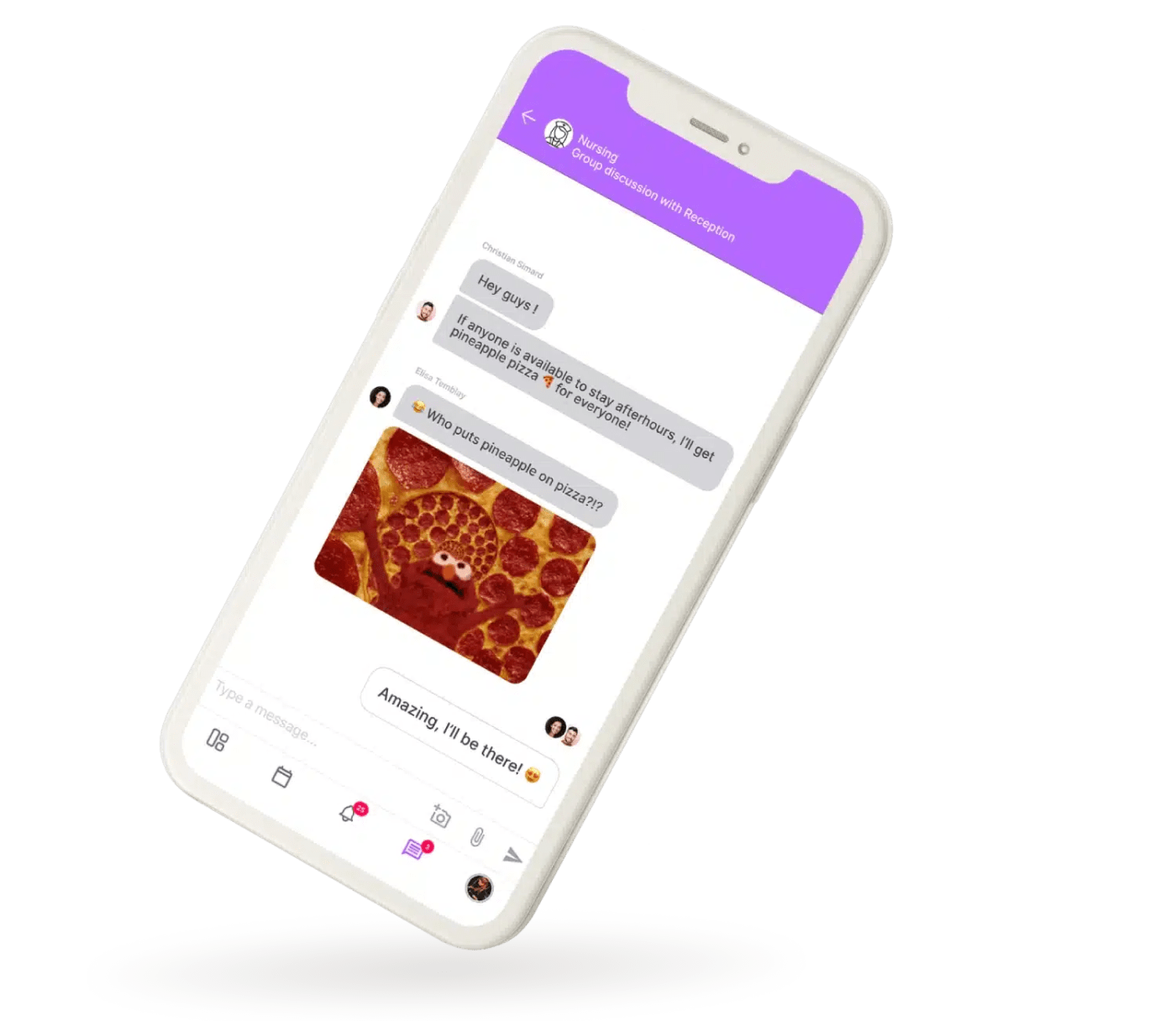
Easily create groups or individual chats with employees to communicate how the swing shifts are working out. Staff can also easily communicate amongst themselves for any shift coverages or questions, without giving out their personal information like their email or phone number. A huge benefit that helps to streamline communication.
Integrated Time Clocks with Payroll
With Evolia, employees can easily clock in and out of shifts using their smartphone or a designated time clock. The best part, these time entries are recorded and synced with popular payroll systems. Ultimately to help you reduce discrepancies and simply payroll processing. Learn more about Evolia’s great integrations.
By taking advantage of our powerful features and tools, you can create a flexible and efficient work environment that meets the needs of both your business and your employees.
Final Thoughts
Swing shifts can work wonders on providing a better guest experience, increasing operational efficiency, and helping to manage workloads during transitional periods or increased demand.
However, like any addition to the schedule, this can bring other manual work like increased shift swaps, collection of availability, etc.
So, it’s important to use a scheduling software like Evolia. A solution that provides substantial benefits for businesses ready to reduce manual scheduling tasks.
Featured Articles


See Evolia in action. Request a Demo!
Let our experts show you how we can streamline your scheduling and optimize your HR operations.
Get a personalized demo to:
- Automate scheduling and time & attendance.
- Find the workers you need and optimize your internal resources
- Integrated with most HRIS and ERP softwares
We make it work for you!